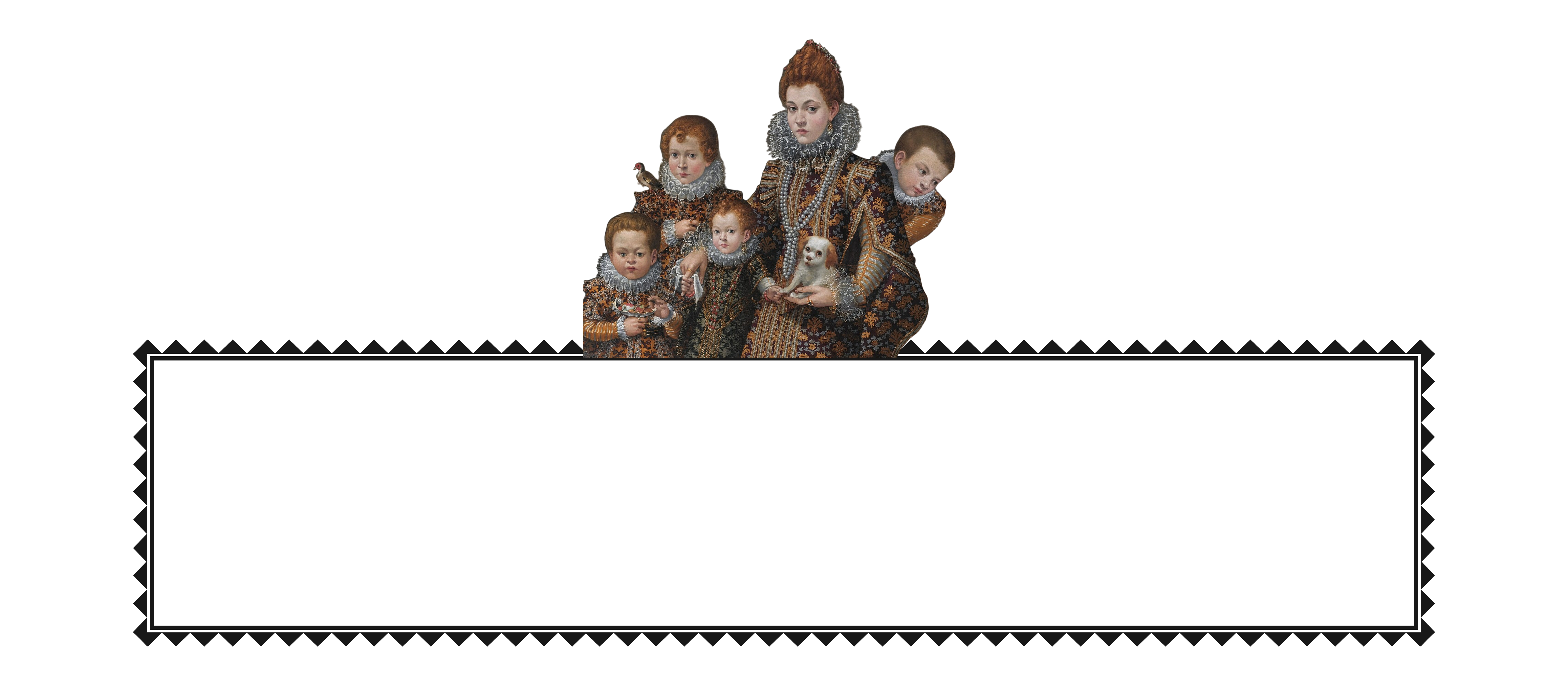
For a scrap of fabric that exists solely to circle your neck, the collar has a history that is anything but modest. From status symbols to sweat-stained shirt edges , collars have been through it all. And today, we can still trace their dramatic transformations through the ages, immortalized in museum portraits of men, women, and children from every era.
Before the 1400s, collars weren't really a thing. Men's necklines ranged from high to what we'd call today a scoop or boat neck. Shirts didn’t need collars because, frankly, there wasn’t much need for them.

By the mid-1500s, the ruff had emerged as the first true collar, evolving from simple shirt gathers at the neck into a separate accessory tied around the throat. What began as a practical way to keep garments clean soon caught on as a fashion trend, spreading from Spain to the rest of Europe. Early ruffs were modest in size and easy to launder, but not for long.

But what began as a modest pleated trim soon escalated into a theatrical halo of linen, lace, and starch...
The cartwheel ruff especially turned heads (and made turning your own head quite difficult). Popular from 1580 to 1610, these oversized collars were stiffened with starch, layered into hundreds of pleats, and could stretch up to a foot from the neck. The finer the linen, the more elite the wearer, with embroidery, jewels, and even precious metals adding to the extravagance.

They were as impractical as they were impressive. Wearing one meant assuming a proud, rigid posture, and making eating or moving your head nearly impossible. Often, ruffs could only be worn once before collapsing from heat and humidity.
Of course, not everyone was impressed. In the 1580s, Englishmen sporting these oversized neck donuts were mocked in France as “the English monster.” Fair.

As the ruff lost its hold (and the neck regained its freedom), a new style emerged: the falling band. Flat, soft, and often edged in lace, it was a welcome shift, easier to wear, easier to clean, and far less theatrical.
By the mid-1600s, these relaxed collars, sometimes called fallen ruffs, had taken over. Men wore them first, but women soon followed. Over time, this style continued to simplify, eventually giving rise to jabots and cravats…

In the 18th century, Enlightenment ideals ushered in a more restrained approach to dress. Out went lace, excess, and flamboyant ruffs. In came simplicity, refinement, and the cravat, a modest white neckcloth first worn by 17th c. croat cavalry, that set the stage for the modern tie.

In the 1830s, a woman named Hannah Montague had a stroke of domestic genius: the detachable collar. Tired of constantly washing her husband's entire shirt, she cut off the grimy collar and stitched on a clean, starched one instead. It worked, and it caught on fast.
This clever hack offered the look of a freshly laundered shirt with a fraction of the effort. Soon, crisp, removable collars became a menswear staple and a subtle status symbol.

By the 1930s, fashion loosened up. As the Duke of Windsor put it, “We were all beginning to ‘dress soft'". Stiff, starched collars faded, and René Lacoste’s polo shirt kicked off the casual revolution.
Around the same time, “white collar” and “blue collar” emerged, terms born less from style than from laundry. Office workers wore crisp whites, while laborers opted for darker, practical fabrics.
Collars grew more relaxed, dress codes blurred, but the collar never vanished, it simply adapted.

The collar lives on, crisp or rumpled, buttoned-up or barely there. It still says something, whether it's "hire me," "brunch time," or "yes, this is vintage." And thanks to period dramas and runway revivals, even the ruff has staged a comeback. One person's historical hassle is another's fashion fantasy.

Skip the awkward small talk over overpriced cocktails. Here's why a museum is your secret weapon for a memorable first date:
Side-by-side walking eliminates the awkward face-to-face restaurant staredown. This positioning creates a more relaxed atmosphere where conversation can develop organically as you move through the space.

Strolling through art and history shows you're cultured—without trying too hard. You don't need to be an expert; showing interest in something beyond Netflix and takeout speaks volumes about your curiosity and depth.

When words fail, point at any bizarre Renaissance baby and ask "Why does that infant have an eight-pack?" Instant ice-breaker. Art provides endless topics to discuss, from the sublime to the ridiculous, making those initial getting-to-know-you moments flow naturally.

Cheaper than dinner and drinks, and definitely fancier than a coffee shop. Many museums have "pay what you wish" options or free admission days. You get all the sophistication without emptying your wallet.

When you're done, you have a natural end to the date—or an easy excuse to keep going elsewhere if things are clicking. "I'm getting hungry after all that art appreciation. Want to grab a bite?" is a smooth transition if the chemistry is right.

Download MuseMuse first. Because nothing kills the mood like pretending to understand medieval tapestries.

Big news: MuseMuse just got nominated for a Webby Award for Best Art & Culture App—aka the Oscars of the Internet. Among 13,000 entries, we made it into the top 12%.
But here’s the thing: we need your vote. Webby winners are decided by a very official jury of… the internet. That’s you. Your friends. Your barista. Every vote counts.
In the meantime, we’ll keep doing what we do best: helping you explore the world through art.
So thank you art lovers! And thank you to everyone who’s ever wanted more from a museum visit and thought, “There has to be a better way.” There is. It’s called MuseMuse. And apparently, it’s Webby-worthy!
Cheers - MuseMuse

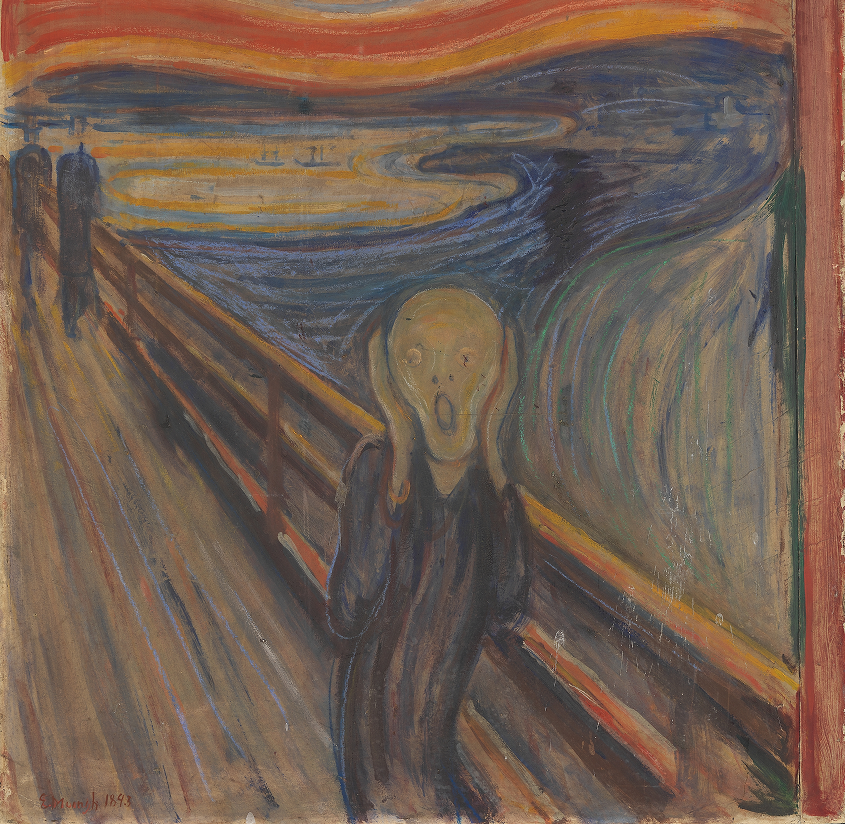
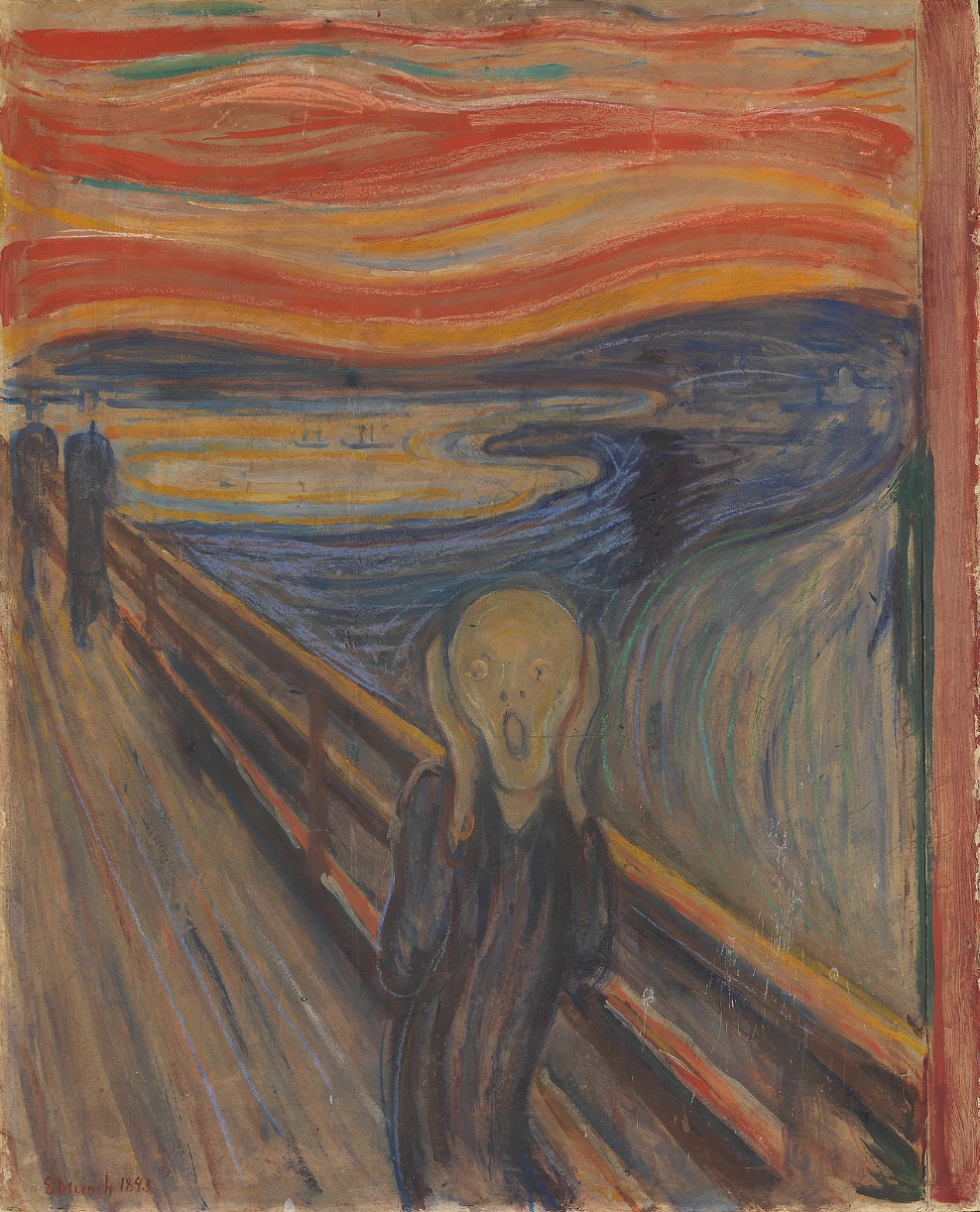
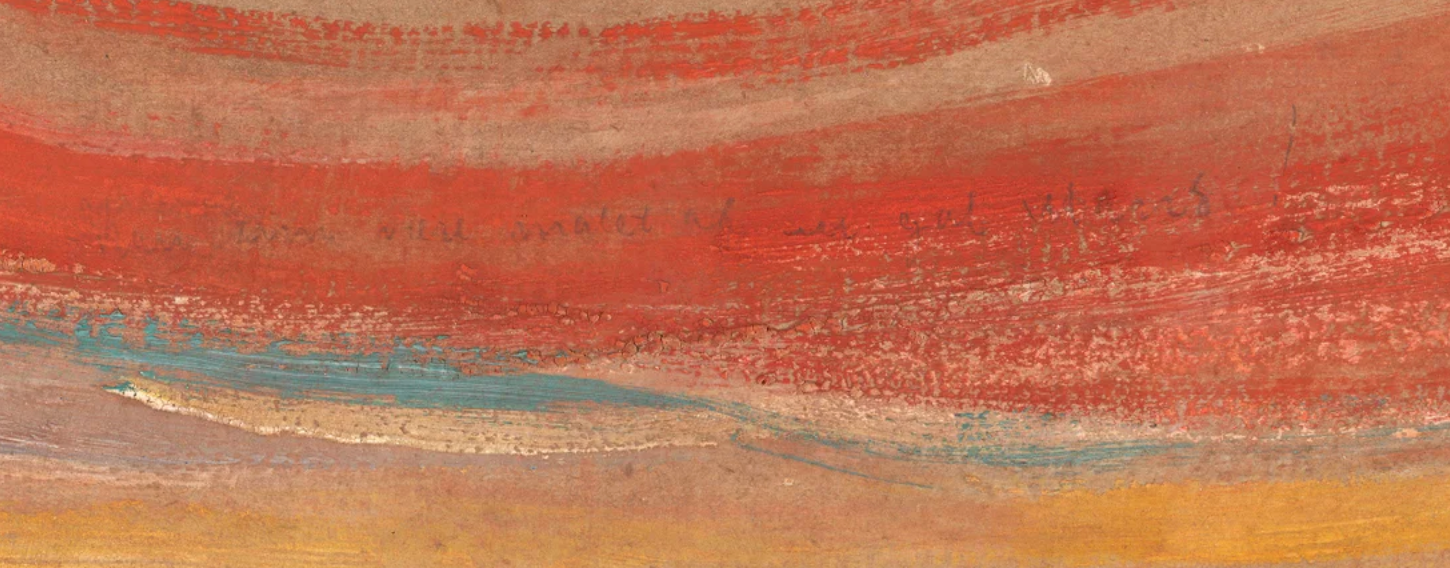
For decades, no one knew what to make of them. Some believed they were the work of a vandal. The truth remained a mystery until 2021, when infrared imaging and handwriting analysis finally settled the debate.
The words were written by Munch himself. The revelation transformed the painting from an expression of terror into something even more intimate: a quiet confession. The inscription appears on only one of the four known versions of The Scream.
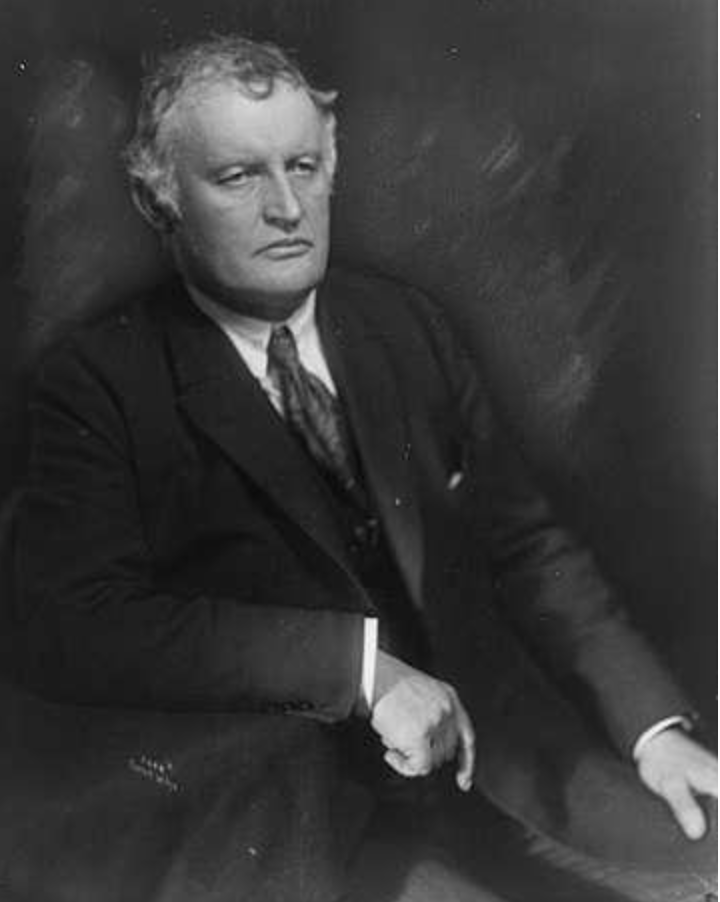
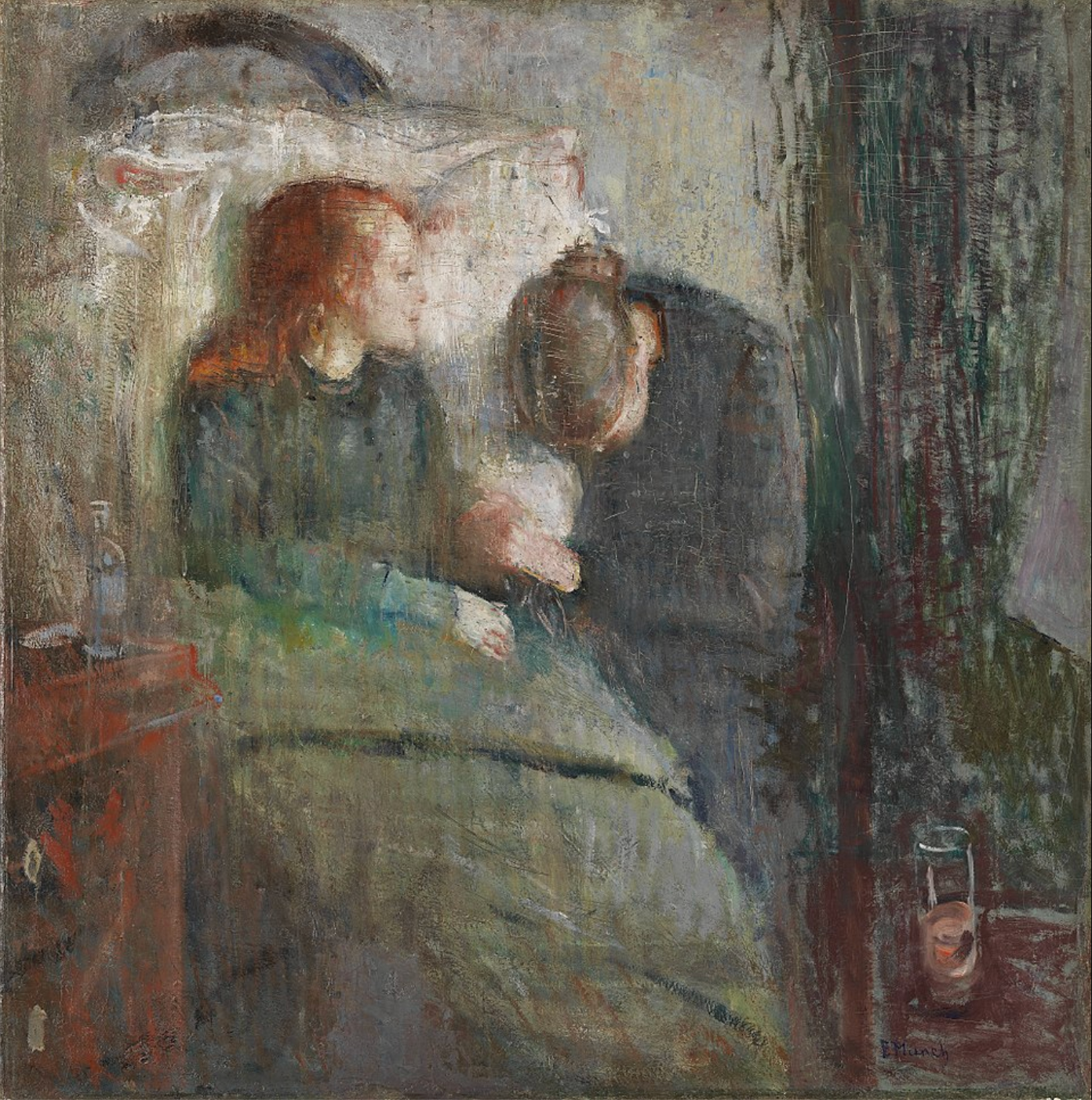
The image was born from a single night that left a permanent mark on Munch. He later described the experience in his diary, and his words are as haunting as the painting itself:
“I was walking along the road with two friends—the sun was setting—suddenly the sky turned blood red—I paused, feeling exhausted, and leaned on the fence—there was blood and tongues of fire above the blue-black fjord and the city. My friends walked on, and I stood there trembling with anxiety—and I sensed an infinite scream passing through nature.”
That moment of dread did not come out of nowhere. Munch’s life was already steeped in loss and fear. His mother and one of his sisters had died of tuberculosis when he was young. Another sister was later committed to a mental asylum. He struggled with alcoholism, anxiety, and recurring breakdowns. Mental illness haunted his family, and Munch lived with the constant fear that madness was not just around him, but inside him, waiting.
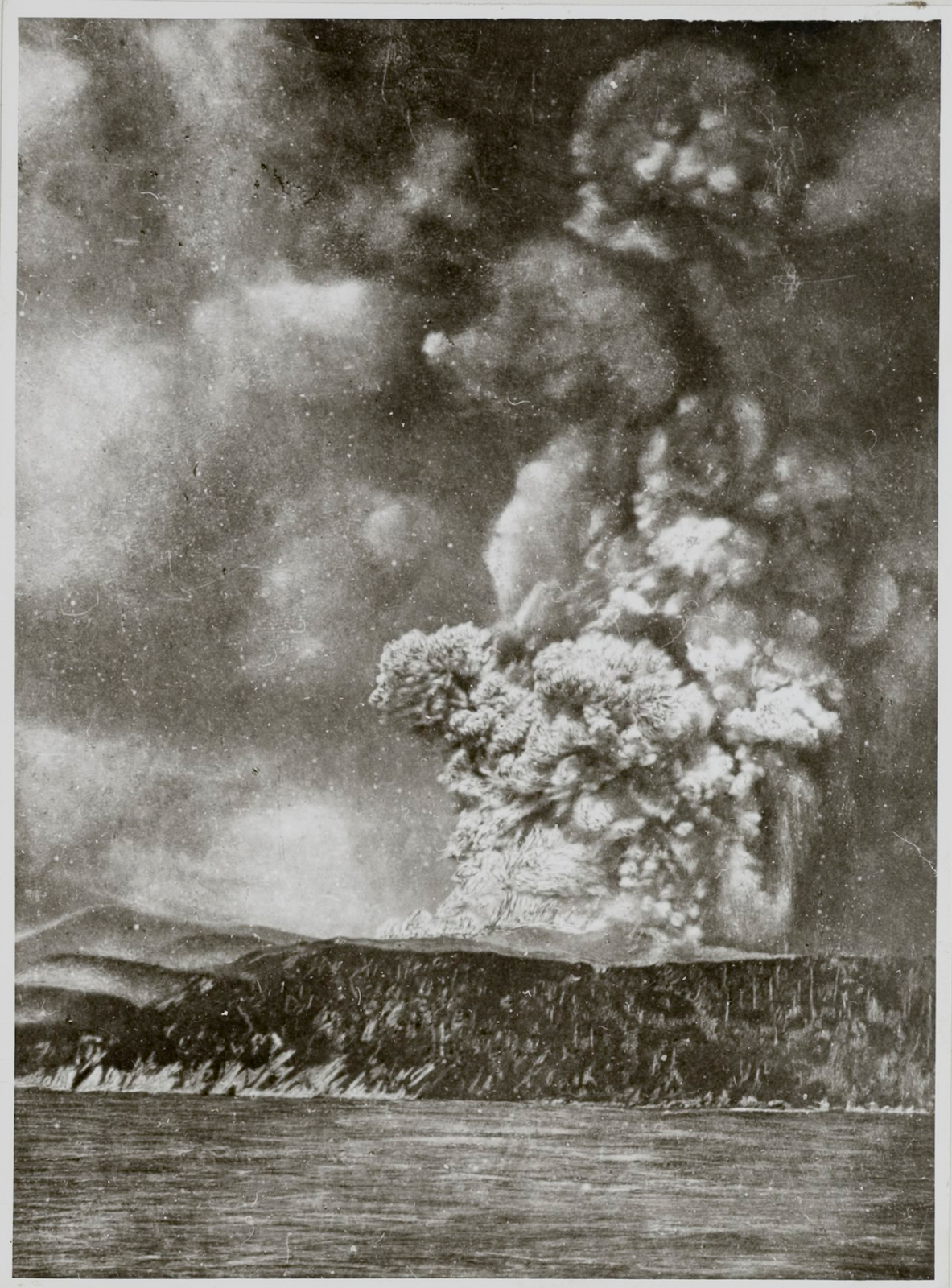
And that burning red sky may not have been pure imagination. Some scientists believe it was inspired by the eruption of the Krakatoa volcano in Indonesia in 1883. The explosion sent ash particles high into the atmosphere, creating spectacular, blood red sunsets around the world for years.
So why would Munch scribble such a brutal line over his own masterpiece?
The words were added after The Scream was first exhibited in 1895, after critics reacted rather harshly. One review mocked the work, suggesting that only a madman could have painted something so disturbing. Munch did not argue publicly. Instead, he responded in pencil, writing the accusation himself in letters so faint they almost disappeared into the paint. It was defiance, irony, and self-awareness all at once.
The painting’s troubled history does not end there. The Scream was stolen twice, once in 1994 and again in 2004, and recovered both times. Four versions of the work exist today. One of them, the 1895 pastel, sold for $119.9M in 2012, making it one of the most expensive ever sold.
What remains is an image that still screams across time, and a single sentence, nearly erased, that asks whether madness was the subject of the painting, or its source.



%20logo.svg)