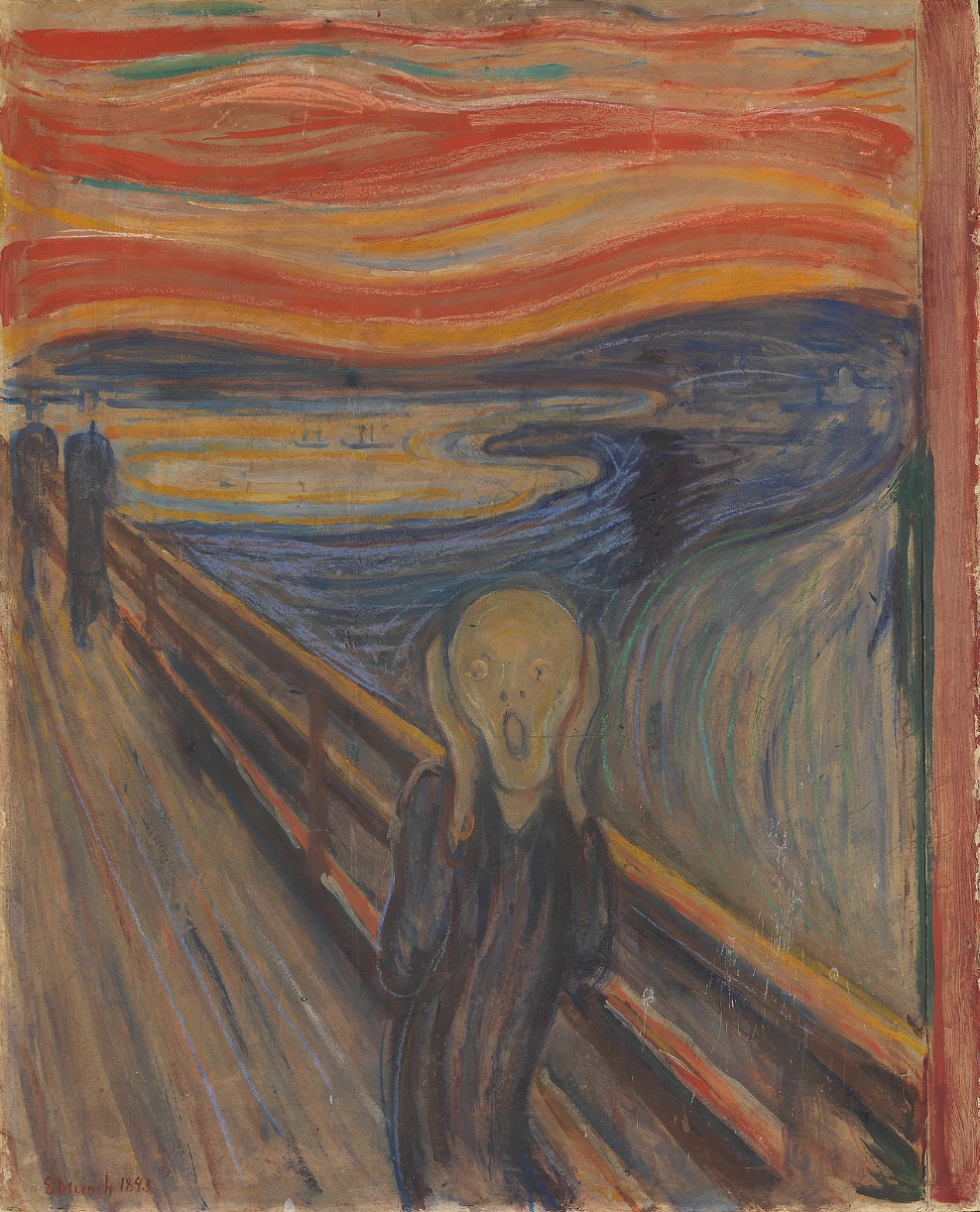
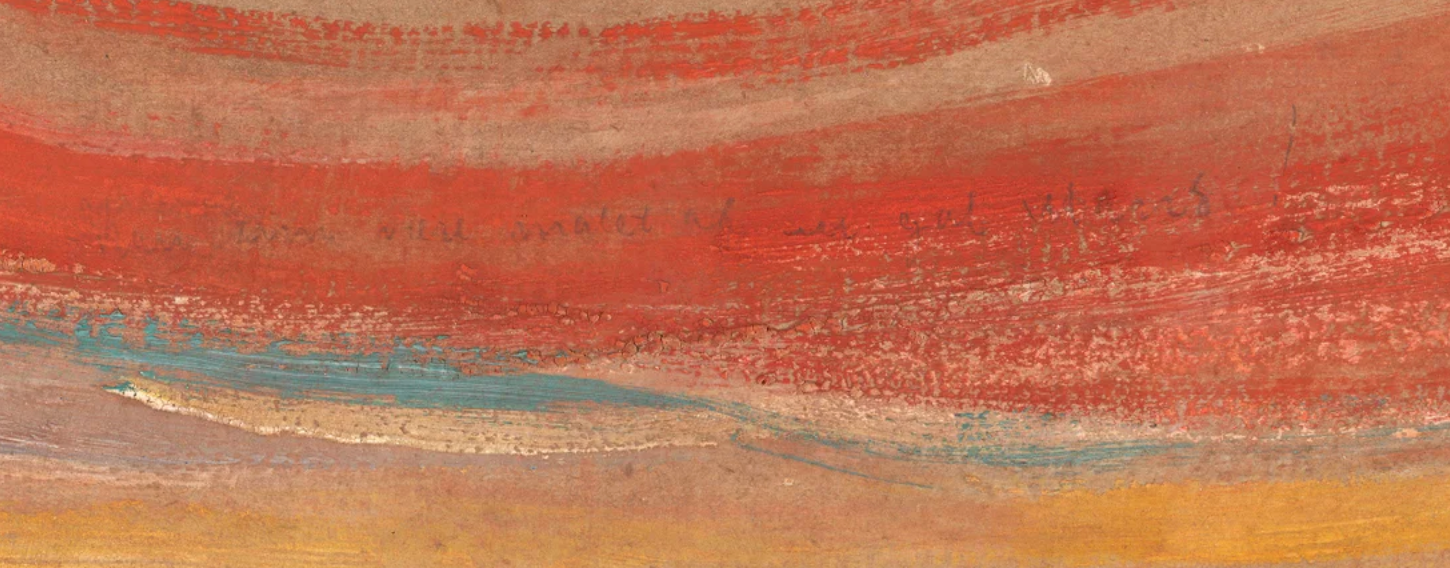
For decades, no one knew what to make of them. Some believed they were the work of a vandal. The truth remained a mystery until 2021, when infrared imaging and handwriting analysis finally settled the debate.
The words were written by Munch himself. The revelation transformed the painting from an expression of terror into something even more intimate: a quiet confession. The inscription appears on only one of the four known versions of The Scream.
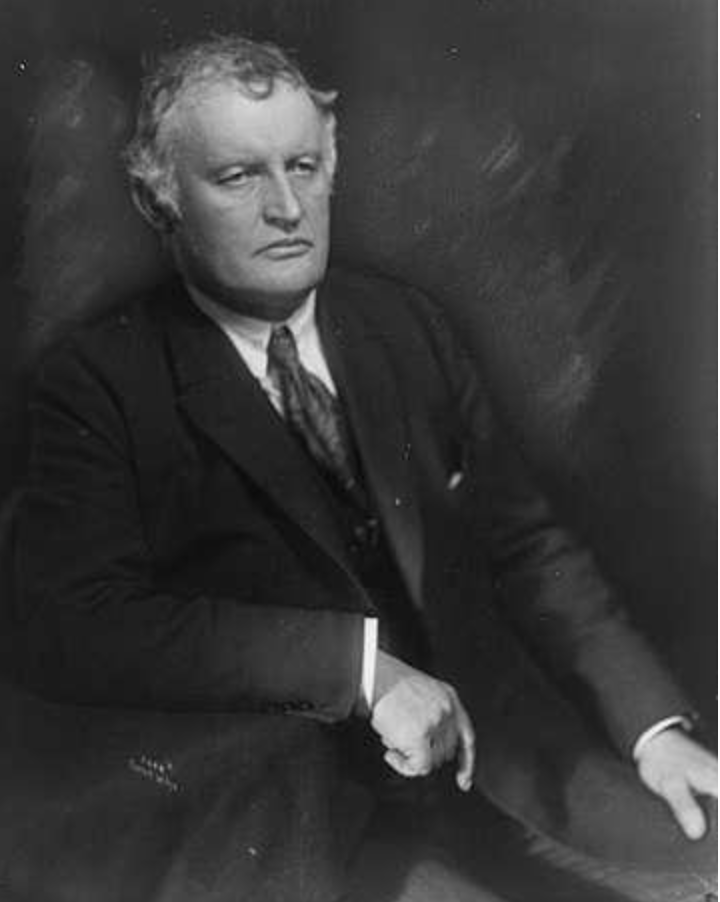
The image was born from a single night that left a permanent mark on Munch. He later described the experience in his diary, and his words are as haunting as the painting itself:
“I was walking along the road with two friends—the sun was setting—suddenly the sky turned blood red—I paused, feeling exhausted, and leaned on the fence—there was blood and tongues of fire above the blue-black fjord and the city. My friends walked on, and I stood there trembling with anxiety—and I sensed an infinite scream passing through nature.”
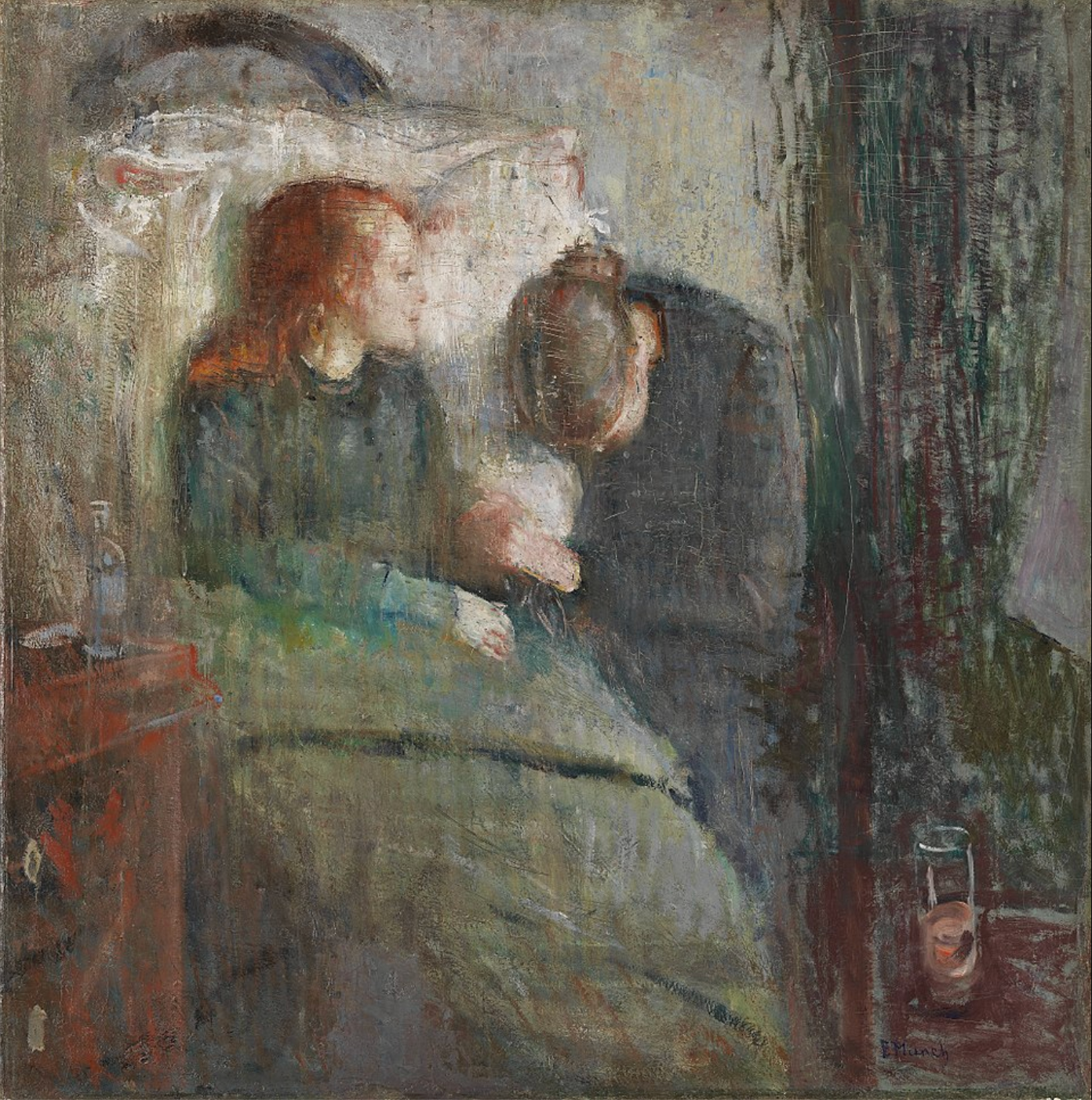
That moment of dread did not come out of nowhere. Munch’s life was already steeped in loss and fear. His mother and one of his sisters had died of tuberculosis when he was young. Another sister was later committed to a mental asylum. He struggled with alcoholism, anxiety, and recurring breakdowns. Mental illness haunted his family, and Munch lived with the constant fear that madness was not just around him, but inside him, waiting.
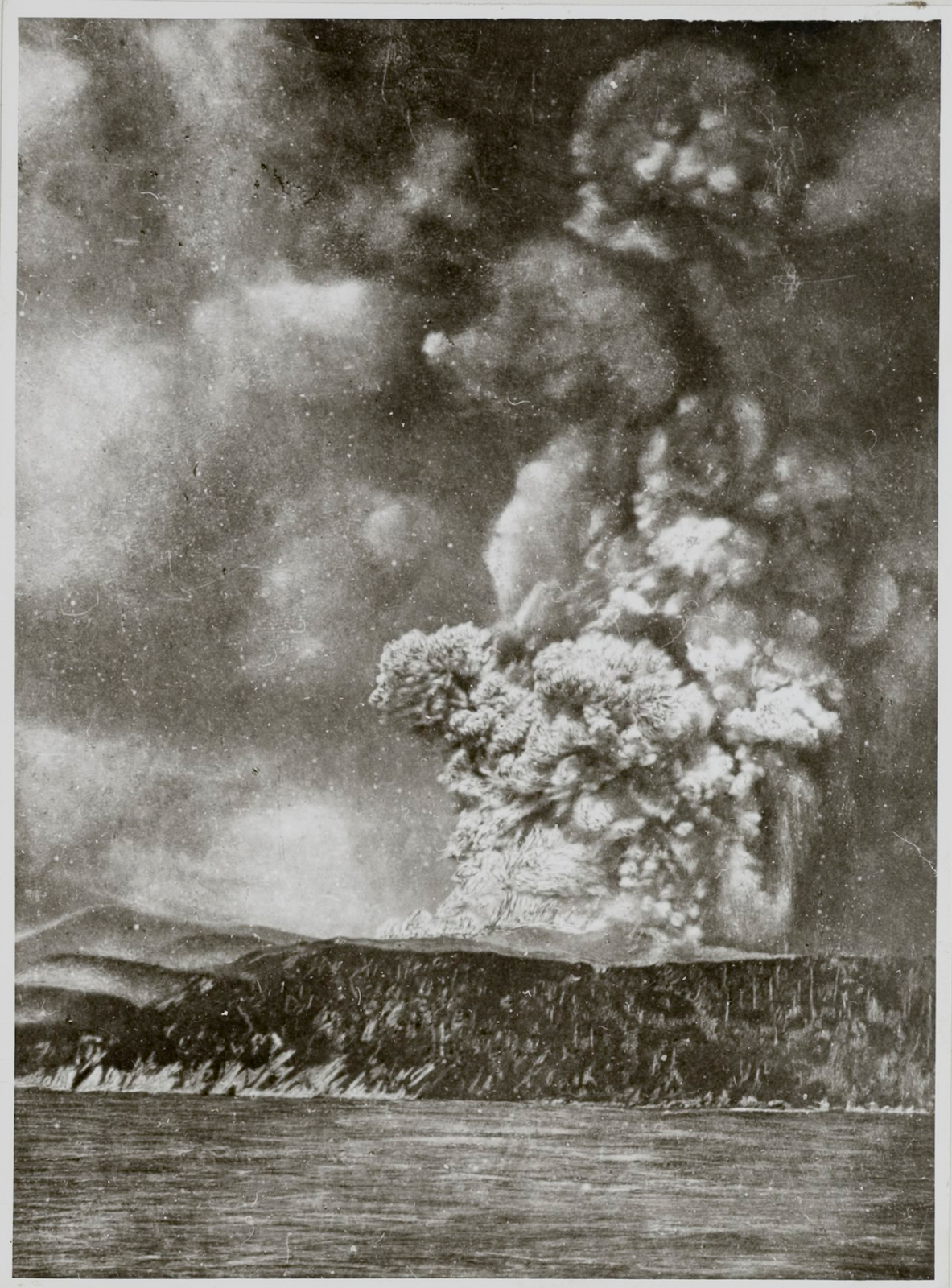
And that burning red sky may not have been pure imagination. Some scientists believe it was inspired by the eruption of the Krakatoa volcano in Indonesia in 1883. The explosion sent ash particles high into the atmosphere, creating spectacular, blood red sunsets around the world for years.
So why would Munch scribble such a brutal line over his own masterpiece?
The words were added after The Scream was first exhibited in 1895, after critics reacted rather harshly. One review mocked the work, suggesting that only a madman could have painted something so disturbing. Munch did not argue publicly. Instead, he responded in pencil, writing the accusation himself in letters so faint they almost disappeared into the paint. It was defiance, irony, and self-awareness all at once.
The painting’s troubled history does not end there. The Scream was stolen twice, once in 1994 and again in 2004, and recovered both times. Four versions of the work exist today. One of them, the 1895 pastel, sold for $119.9M in 2012, making it one of the most expensive ever sold.
What remains is an image that still screams across time, and a single sentence, nearly erased, that asks whether madness was the subject of the painting, or its source.

So, you're coming to London for a long weekend and want to do more than take selfies at Buckingham Palace? This guide is for those who appreciate history, art, and the occasional well-crafted cocktail in a dimly lit bar...

✅ Spring (April–May) & Early Autumn (September–October) – Pleasant weather / fewer crowds.
✅ Summer (June–July) – Longer days, lively atmosphere, but busier.
❌ January & February – Cold, wet, and dark; but also the quiestest months.
❌ December – Magical Christmas lights, but expect crowds and expensive hotels.

The best ways to arrive in London:
Heathrow Airport – Take the Heathrow Express (15 min to Paddington Station).
Gatwick Airport – Take the Gatwick Express (30 min to Victoria Station).
By Train – St. Pancras International is the main hub for Eurostar and long-distance train arrivals.
🚇 Public Transport – No need to buy paper tickets; just tap your credit card or phone on the Tube and buses.
💷 Currency – Most places are cashless; card payments are widely accepted.
🛂 Visa/Entry Requirements – Entry rules have changed recently! Americans & Europeans need to apply for an Electronic Travel Authorization (ETA) before traveling. Be sure to check the official UK government website for the latest information well before your trip, as processing times can vary.
🚨 Security – Phone & bag thefts are common. Keep valuables secure, avoid using your phone near roads (grab-and-run thefts happen!), and be mindful of designer bags. The Tube & buses are safe, but avoid traveling alone late at night.
Let’s be honest, British food isn’t the reason you came. London’s true magic is its global cuisine. Here’s where to go:
French
Soutine (St. John’s Wood) $$$ – Classic French brasserie in a charming neighborhood.
Brasserie Zédel (Soho) $$$ – Old-school Parisian brasserie in the heart of London.
Austrian
Fischer’s (Marylebone) $$$ – Viennese café with schnitzel, bratwurst & apple strudel.
Polish/Baltic
Ognisko (Kensignton) $$ – Delicious Polish classic (Pierogi's are a must)!
Italian
Lina Stores (Multiple locations) $$ – Handmade pasta, good pricing.
Carlotta (Marylebone) $$$ – A fun/lavish Italian-American spot.
Persian
Berenjak (Soho & Borough Market) $$$ – Persian charcoal-grilled perfection. Book way ahead!
Indian
Dishoom (Multiple locations) $$ – You can only book for large groups, so expect a queue—it’s always busy, but absolutely worth it if you’re craving a proper curry .
Kutir (Chelsea) $$$ – High-end Indian in a stunning Georgian townhouse.
Asian
BAO (Multiple locations) $$ – Taiwanese street food, minimalist & trendy.
Bright Courtyard Club (Marylebone) $$$ – Classic Chinese dim sum & Peking duck.
Mexican
Kol (Marylebone) $$$ – Innovative, high-end Mexican cuisine.
American
Smokestak (Shoreditch) $$$ – BBQ done right.
⚠️ Book ahead—London restaurants fill up fast!

London's pub culture is as essential to understanding the British psyche as queuing and apologizing when someone else steps on your foot.
Ye Olde Cheshire Cheese – A historic pub since 1666—feels like stepping back in time.
Guinea Grill (Mayfair) – Iconic steak pub, perfect for an old-school London experience.
The Pelican (Notting Hill) – Cozy pub with great food & wine list.
The Churchill Arms (Kensington) – Famous for floral displays & solid Thai food.
The Albion (Angel) – A hidden gem with a beer garden & fireplace.
Sketch – A stylish and creative bar with beautifully designed interiors.
⚠️ Most museums are FREE! (Unless you want to see the special exhibits)
National Gallery – London's top art collection.
British Museum – Home to treasures from around the world. Pro tip: Book online in summer to skip the line
Victoria & Albert Museum – Fashion, design, and decorative arts.
Tate Modern – Contemporary and modern art housed in a repurposed power station.
Tate Britain – British artists, historical to modern.
Wallace Collection – 18th-century mansion packed with Rococo art & medieval armor.
Sir John Soane's Museum – The home of an eclectic collector, filled with architectural curiosities. Visit by candlelight on the first Tuesday of each month.
Courtauld Gallery – Features masterpieces by Manet, Van Gogh, and Cézanne without the National Gallery crowds.
Kenwood House – A stately home on Hampstead Heath, featuring Rembrandt & Vermeer. Best visited on a sunny day—take a walk in the Heath, and grab a pint at the historic Spaniards Inn nearby.
Denis Severs' House – An immersive time-capsule experience of an 18th-century home. Book a silent tour for the full atmosphere or a theatrical tour in the evening.
Churchill War Rooms – The underground bunker where Churchill directed WWII. Pre-booking is essential.
Use MuseMuse for your next museum visit—you'll get:
✅ Self-guided museum tours (so you can go at your own pace).
✅ Engaging, digestible stories about art.
✅ Hidden gems & highlights that even locals might miss.


High Luxury:
✅ Bond Street & Mayfair – Home to flagship stores of Burberry, Louis Vuitton, and Tiffany & Co.
✅ Harrods – One of the most famous department stores in the world. Visit the food hall!
✅ Selfridges – A modern/vibrant department store, great gift ideas in the basement.
✅ Liberty London – Historic shopping mall built from an old ship. Famous for its iconic fabric prints, which you can buy by the meter.
Boutiques & Independent Shops:
✅ Marylebone High Street – Great for small, independent boutiques and upscale shops in a village-like atmosphere.
✅ Chelsea High Street – A mix of high-end shops and charming stores along the King's Road.
Vintage & Markets:
✅ Camden Market – Sprawling market known for alternative fashion, handmade crafts, and street food.
✅ Borough Markets – Great street food.


London's theatre scene is world-class, so book in advance for the best seats.
Book of Mormon – Warning: Very, very dark humor. If you're easily offended, maybe sit this one out.
Witness for the Prosecution – A small but excellent Agatha Christie production set in a real courtroom for the extra drama.
Zidel's Black Cat Cabaret – A tiny, ultra-exclusive Saturday night show in an iconic underground Soho location. Book way ahead! Cocktails are great, the atmosphere is even better.
Moulin Rouge – This one was fun!

Regent's Park – Features the famous rose garden, perfect for a peaceful stroll.
Hyde Park – A great place for a walk, and you might even see the Household Cavalry exercising their horses.
Kew Gardens – Botanical paradise best when flowers are in bloom. Note that it is quite far from the city center.
📍 Morning:
📍 Afternoon:

📍 Morning:
📍 Afternoon:
📍 Morning:
📍 Afternoon:


Seven Sisters Hike – Gorgeous white cliffs on the coast, accessible by train and local buses. Take the train to Seaford or Eastbourne and follow the well-marked coastal path.
Oxford – Historic university town just an hour from London by train. Visit the Bodleian Library, Christ Church College, and the Ashmolean Museum.
Cambridge – Book a punting (boat) tour ahead of time to see the historic colleges from the river. Also visit King's College Chapel and the Fitzwilliam Museum.
Windsor – See Windsor Castle, the oldest and largest occupied castle in the world, and take a walk in the Great Park.
Bath – Famous for its Roman Baths and Georgian architecture, this UNESCO World Heritage site is about 90 minutes from London by train.
Cotswolds – Quaint villages and rolling countryside. Visit Bourton-on-the-Water, Stow-on-the-Wold, and Chipping Campden.
Snowshill Manor – A small, eclectic Victorian collector's house filled with unusual treasures and surrounded by beautiful gardens.
Waddesdon Manor – A grand Rothschild estate with stunning gardens, impressive architecture, and an excellent art collection.
Blenheim Palace – The birthplace of Winston Churchill and a magnificent example of English Baroque architecture set in landscaped parkland.
London is a beast, but with a little planning (and some well-placed drinks), it’s a dream for culture lovers. Follow this guide, avoid the tourist traps, and most importantly, don’t leave without seeing some art! Your brain will thank you.

Heads up for your next trip to Rome! Think the Sistine Chapel is the only ceiling worth seeing? Think again.


Skip the awkward small talk over overpriced cocktails. Here's why a museum is your secret weapon for a memorable first date:
Side-by-side walking eliminates the awkward face-to-face restaurant staredown. This positioning creates a more relaxed atmosphere where conversation can develop organically as you move through the space.

Strolling through art and history shows you're cultured—without trying too hard. You don't need to be an expert; showing interest in something beyond Netflix and takeout speaks volumes about your curiosity and depth.

When words fail, point at any bizarre Renaissance baby and ask "Why does that infant have an eight-pack?" Instant ice-breaker. Art provides endless topics to discuss, from the sublime to the ridiculous, making those initial getting-to-know-you moments flow naturally.

Cheaper than dinner and drinks, and definitely fancier than a coffee shop. Many museums have "pay what you wish" options or free admission days. You get all the sophistication without emptying your wallet.

When you're done, you have a natural end to the date—or an easy excuse to keep going elsewhere if things are clicking. "I'm getting hungry after all that art appreciation. Want to grab a bite?" is a smooth transition if the chemistry is right.

Download MuseMuse first. Because nothing kills the mood like pretending to understand medieval tapestries.



%20logo.svg)